Field report, June 2, 2026
The bite was inside the first six feet.
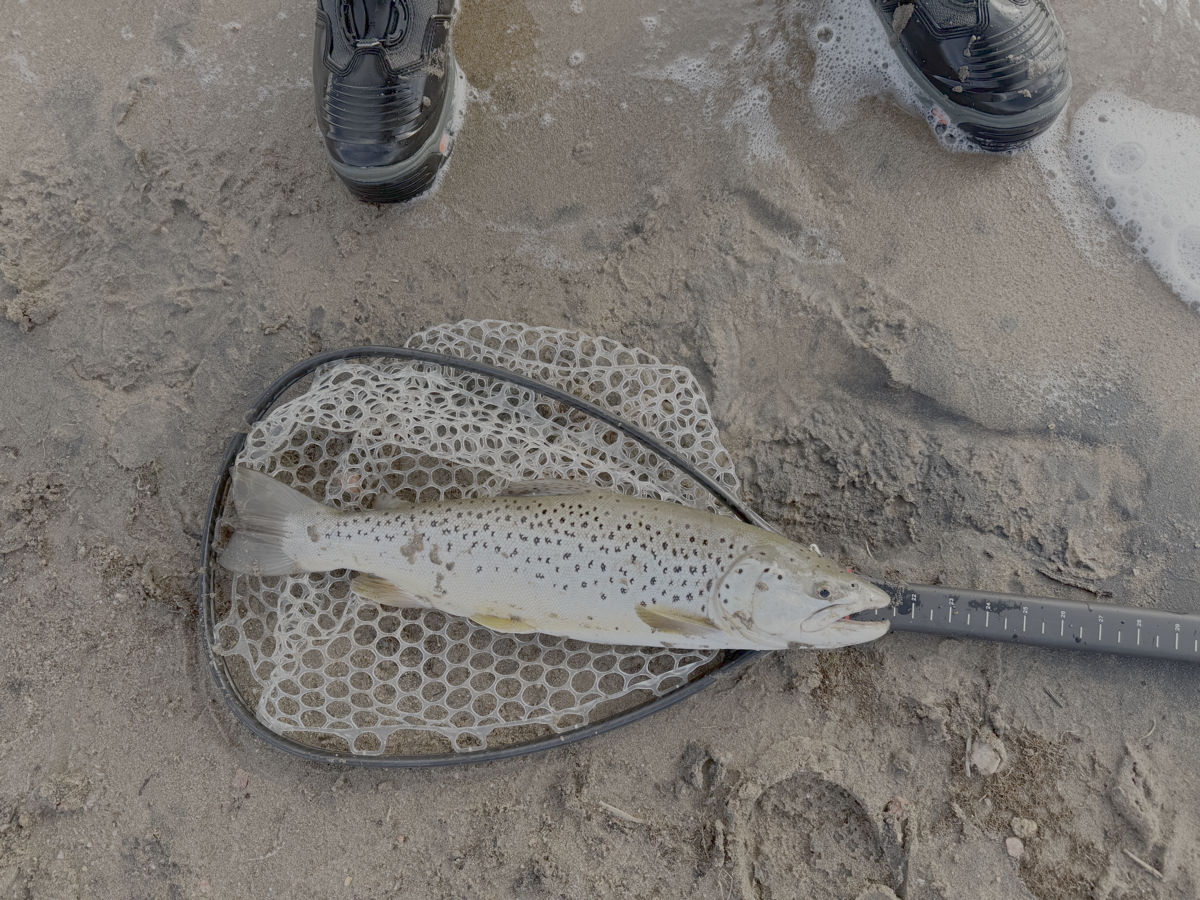
Paul hiked into Buffalo Bay and found the whole report tucked against the bank: follows at the rod tip, a profile change, a gold spoon confirmation, and a parallel retrieve that turned the shoreline on.
- Trout landed
- 11
- Best trout
- About 20 in
- Pike active
- 20-24 in fish
- Key depth
- 5-6 ft from bank
Bank-lane read
The report is not a lake report. It is a six-foot shoreline report.
The useful pattern was compressed against the bank. Paul did not solve it by casting farther. He solved it by staying in the edge water, changing profile, moving with the wind, and finally running the lure parallel to shore.
The hike bought the right kind of bank.
Paul skipped the easier beach water and hiked into Buffalo Bay. The useful bank was steeper, quieter, and set up with wind pushing food into the edge.
The report starts with access, not a lure change.
The fish were almost underfoot.
Trout followed close enough to show themselves at the rod tip. Long casts into open water were not the first answer because the feeding lane was tight to the bank.
The day became a shoreline-edge report.
The larger tube found fish but did not close them.
A tube jig or larger soft plastic drew follows without full commitment. That made the next move clear: keep the lane, change the profile.
Useful refusal, not wasted time.
Micro spoons and micro jigs got immediate reactions.
Smaller profiles got a hit right away and then short strikes. They proved the fish were willing, but the day still needed a presentation that could cover the bank lane cleanly.
Small profile confirmed the bite window.
The gold Kastmaster kept the bank honest.
The gold spoon produced fish and kept drawing attention while Paul moved. It was the search tool that stayed useful when the bank still looked alive.
A reliable producer before the best bite.
The wind shift reset the whole report.
When the wind changed, Paul moved again instead of grinding the old angle. The lake was nearly empty, and the new bank gave him the retrieve angle he needed.
Low pressure plus a better lane.
The Countdown-style lure made the pattern obvious.
Waist-deep wading let Paul cast down the bank instead of away from it. Once the lure stayed beside shore, trout and pike started hitting in the same narrow strip.
The repeatable lesson of the day.
Bank edge
The useful water was not far offshore. It was the first few feet beside the bank.
Cast path
Parallel, not straight out
Strike lane
5-6 ft
Field notebook
The useful notes are the moments Paul changed something.
Wind
Observation
Food was being pushed into the bank.
Decision
Fish the edge before bombing casts into open lake.
Follow
Observation
Trout followed the tube all the way in.
Decision
Keep the same water, but shrink the profile.
Move
Observation
The wind shifted and the first angle faded.
Decision
Change shoreline instead of waiting out dead water.
Angle
Observation
The best lane ran beside the bank.
Decision
Wade waist-deep and cast parallel to shore.
Species
Observation
Pike were hitting in the same water as trout.
Decision
Treat the pike as a live-bank signal, not a separate pattern.
Lure bench
The lure sequence explains the bank.
This is not a product carousel. Each presentation earned its place because it revealed something about the edge water.
The order matters: locate fish, shrink profile, cover the wind-blown bank, then hold a Countdown-style lure in the parallel lane long enough for trout and pike to expose the best water.
Locator
Tube jig or larger soft plastic
Close follow lane
Fish followed it all the way in, but the larger profile did not make them commit.
Showed that trout were present and tight to shore.
Downsize check
Micro spoons, micro jigs, micro presentations
First 5-6 ft
Small profiles got an immediate hit and then short strikes, which confirmed the fish were willing to react.
Proved the pattern needed profile changes before moving water.
Search and confirm
Gold Kastmaster
Wind-blown bank
The gold spoon produced fish and kept attention on the bank while Paul worked down the shore.
A reliable bank-covering tool when the fish were showing.
Best window
Countdown-style lure
Parallel retrieve
The hard bait shined when Paul cast parallel and kept it in the strike zone beside shore.
Triggered the strongest stretch, including trout and active pike.
Pike in the same lane
The pike were not a side story.
Paul ran into northern pike around 20-24 inches while targeting trout. They were using the same edge water, which matters because it says the bank was alive for more than one species.
The management note stays simple: Spinney encourages pike removal, but if you keep them, use them. Do not waste fish on the bank, and check current rules before keeping trout or pike.
Repeat this pattern
What Paul would try first next time.
- 01
Start by reading which bank the wind is feeding.
- 02
Fish the first 5-6 feet before reaching for distance.
- 03
If larger plastic gets follows, downsize to micro presentations before leaving.
- 04
Use a gold spoon to cover the edge when fish are showing.
- 05
When the angle is right, cast parallel and keep the lure beside shore.
Bottom line
Buffalo Bay paid off because Paul treated the bank like the main water.
Fish the edge first. Let follows tell you what to change. Move when the wind changes. When the lane lines up, retrieve parallel to shore.